Packaging Guidelines for Flipkart & Amazon: How to Avoid Penalties
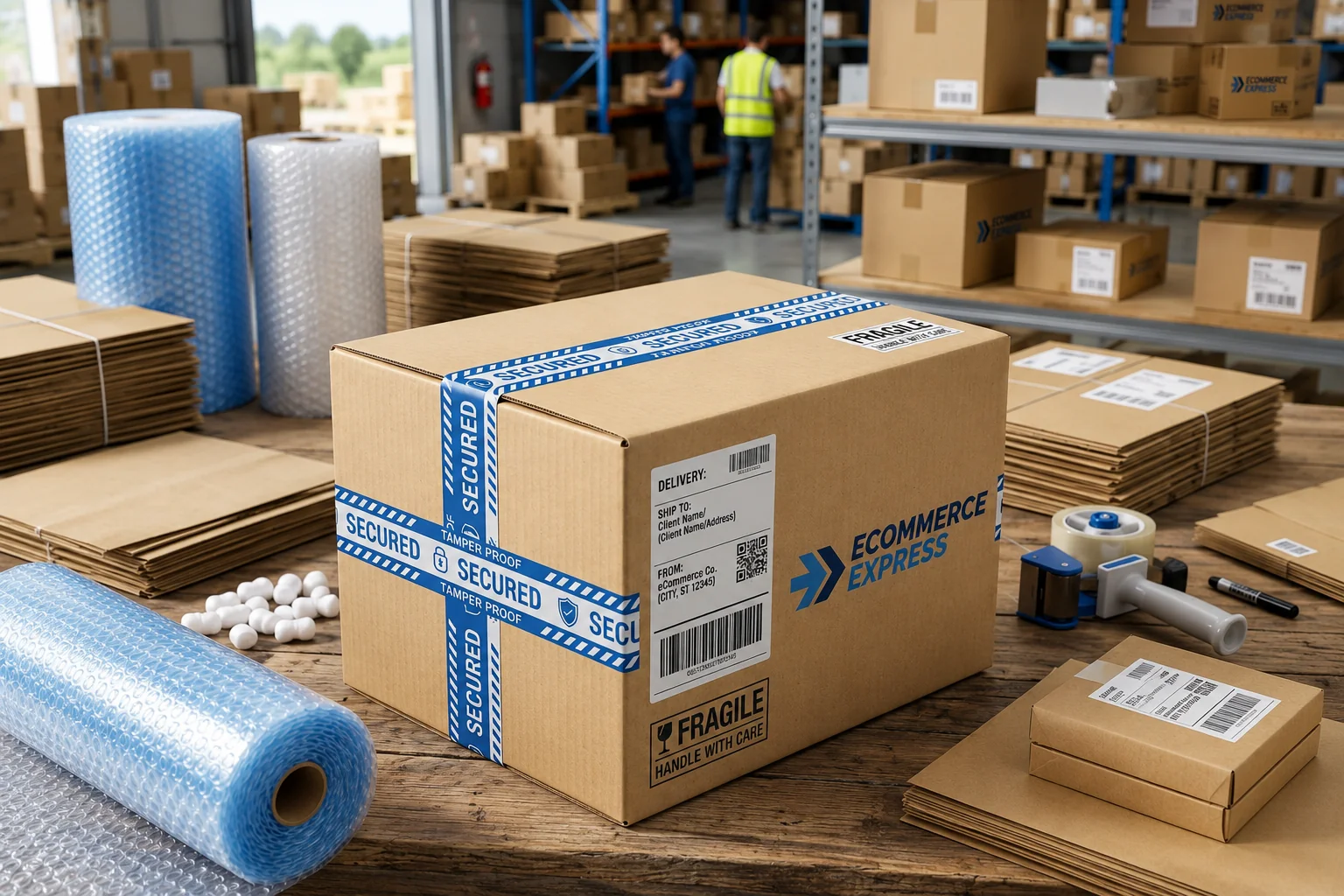
Imagine you have made a sale, packed the product, and shipped it. But a week later, the customer returns it because it was broken, or worse, the marketplace slaps you with a "Wrong Packaging" penalty. Effective packaging is not just about protection; it's about compliance and branding.
In this guide, we will break down the essential packaging rules for Flipkart and Amazon sellers in India to help you keep your account healthy and your customers happy.
The Importance of Correct Packaging
Marketplaces are very strict about their packaging materials. Using the wrong box or unbranded polybags can lead to:
- Fines and Penalties: Extra charges on your payout.
- Damaged Returns: High loss of inventory.
- Negative Ratings: Customers judge the product quality by the box it arrives in.
1. Flipkart Packaging Rules
Flipkart requires specific branded packaging for most categories. If you are a new seller, you must purchase Flipkart-branded polybags and boxes.
- Security Tapes: Use Flipkart-branded security tapes to prevent tampering.
- Right Sizing: Don't use a massive box for a small item. You will be charged extra for "Volumetric Weight".
- Invoices: The shipping label must be clearly visible on the outside.
2. Amazon Packaging Guidelines
Amazon offers more flexibility but demands high standards. They recently moved towards eco-friendly, plastic-free packaging in many regions.
- Corrugated Boxes: Use 3-ply or 5-ply boxes for fragile items.
- Void Fillers: Use bubble wrap or recycled paper to ensure the product doesn't move inside the box.
- Easy Ship vs FBA: If you are on Amazon FBA, they handle the packing. If you use Easy Ship, you must follow the "Frustration-Free Packaging" standards.
3. The "Shake Test"
Before sealing any box, give it a gentle shake. If the product moves or rattles inside, you need more padding. A rattling product is 50% more likely to break during the bumpy transit of courier trucks.
4. Protect Your Shipping Labels
The label is the most important part of the package. If it gets torn or wet, your product will never reach the customer and will be marked as RTO (Return to Origin).
- Never apply transparent tape over the barcode (it reflects light and scanners fail).
- If you use thermal stickers, don't apply heat to them or store them in direct sunlight.
Deep Dive: Core Principles & Operational Architecture
Mastering Packaging Guidelines for Flipkart & Amazon requires a rigorous understanding of both platform algorithms and practical ground operations. For high-volume sellers in India, small efficiencies compound across thousands of monthly orders, separating profitable multi-channel enterprises from struggling accounts.
Whether you operate primarily on Flipkart, Amazon, Meesho, or through direct-to-consumer (D2C) channels, establishing structured, repeatable standard operating procedures (SOPs) ensures consistency, minimizes human error during peak packing hours, and protects your account health score from automated policy violations.
Comprehensive Step-by-Step Strategic Framework
To implement industry best practices for Packaging Guidelines for Flipkart & Amazon, follow this proven five-phase execution roadmap:
- Audit & Baseline Assessment: Begin by collecting historical operational data from the past 90 days. Identify recurring bottlenecks, margin leaks, return patterns, and compliance gaps.
- Infrastructure & Process Setup: Implement dedicated software workflows, automated client-side calculation tools, and standardized labeling systems. Eliminate manual calculations and spreadsheet dependencies where possible.
- Quality Control & Verification Protocols: Establish multi-point verification checks before any order is dispatched, any invoice is generated, or any campaign budget is allocated.
- Continuous Performance Benchmarking: Track core key performance indicators (KPIs) on a weekly basis. Compare your metrics against top-tier seller benchmarks in your specific product category.
- Optimization & Iterative Scaling: Reinvest recovered capital and operational time into catalog expansion, private-label branding, and optimized inventory depth across regional fulfillment centers.
Real-World Business Case Study & Numerical Analysis
Consider a mid-sized online merchant processing 1,500 monthly shipments in the competitive fashion and home accessories category. Prior to streamlining their operational workflow for Packaging Guidelines for Flipkart & Amazon, the seller experienced an average overhead loss of ₹18 to ₹35 per order due to operational friction, processing delays, and unverified deductions.
| Metric Area | Before Optimization | After Implementation | Net Operational Impact |
|---|---|---|---|
| Processing Time Per Unit | 4.5 minutes | 1.2 minutes | 73% time saved per dispatch batch |
| Error & Discrepancy Rate | 6.8% of dispatches | 0.4% of dispatches | Elimination of penalties & RTO flags |
| Monthly Overhead Savings | ₹0 (Baseline) | ₹32,500 / month | Direct bottom-line profit injection |
Common Pitfalls to Avoid
- Ignoring Automated Algorithm Updates: E-commerce marketplaces update their ranking and compliance algorithms frequently. Relying on outdated strategies risks sudden traffic loss.
- Neglecting Regular Data Reconciliation: Failing to match platform reports against actual bank settlements and tax portal filings leads to uncollected reimbursements and surprise tax penalties.
- Relying on Manual Calculations: Manual data entry introduces mathematical errors in tax breakdowns, HSN allocation, and margin evaluations. Always use automated, tested calculation engines.
- Compromising on Document Integrity: Low-resolution shipping labels, illegible barcodes, or non-compliant invoices cause courier scan failures and buyer disputes.
Frequently Asked Questions (FAQs)
How does Packaging Guidelines for Flipkart & Amazon directly impact seller profitability?
By eliminating operational inefficiencies, reducing return rates, ensuring full tax credit recovery, and enhancing catalog search rankings, proper implementation directly widens gross profit margins by 3% to 8%.
Is this process applicable for small sellers with low daily order volume?
Yes. In fact, implementing these best practices early prevents compounding administrative debt as your order volume scales from 10 orders a day to several hundred.
What tools are recommended to automate this workflow?
Utilize Private Crop's suite of free client-side utilities—including automated shipping label croppers, PDF mergers, and GST invoice calculators—to handle repetitive processing securely inside your browser without monthly software subscription costs.
Daily Operational Checklist for E-Commerce Sellers
- ☐ Verify all pending order dispatches within platform SLA windows.
- ☐ Inspect cropped shipping labels for high-contrast barcode clarity before printing.
- ☐ Log and reconcile incoming customer returns and courier RTO packages.
- ☐ Cross-check tax rates, HSN codes, and invoice serial numbers against current regulations.
- ☐ Archive digital copies of all daily settlement files and tax invoices for long-term audit readiness.
Conclusion
Proper packaging is an investment, not a cost. By following marketplace guidelines, you avoid unnecessary fines and ensure your products reach the customer in one piece. For more tips on optimizing your e-commerce operations, check out our other guides.
Frequently Asked Questions
No. Flipkart requires sellers to ship products in official Flipkart-branded polybags or boxes sealed with Flipkart security tape. Using plain unbranded boxes can lead to penalties or rejection at the hub.
Volumetric weight measures the package volume instead of its actual weight. It is calculated as (Length x Width x Height) / 5000. If you use a box that is too large for your product, you will be billed extra for volumetric weight.
No, never put tape over a thermal label. The adhesive in transparent tape contains chemicals that can fade the thermal printing over time, and the tape's shiny surface reflects scanner light, causing courier scanning failures.
🚀 Grow Your Seller Account with Our Tools
Process labels 10x faster, calculate absolute profit metrics and improve product listings instantly!



Frequently Asked Questions
Can I use normal unbranded cardboard boxes to ship Flipkart orders?
No. Flipkart requires sellers to ship products in official Flipkart-branded polybags or boxes sealed with Flipkart security tape. Using plain unbranded boxes can lead to penalties or rejection at the hub.
What is volumetric weight and how does packaging size affect it?
Volumetric weight measures the package volume instead of its actual weight. It is calculated as (Length x Width x Height) / 5000. If you use a box that is too large for your product, you will be billed extra for volumetric weight.
Is it okay to put transparent cello tape over a thermal shipping label?
No, never put tape over a thermal label. The adhesive in transparent tape contains chemicals that can fade the thermal printing over time, and the tape's shiny surface reflects scanner light, causing courier scanning failures.